“Food Is Everything We Are...
It’s an extension of nationalist feeling, ethnic feeling, your personal history, your province, your region, your tribe, your grandma. It’s inseparable from those from the get -go”- Anthony Bourdain
Locally available ingredients most often contribute largely to the essence of regional cuisine. Of course the cuisine is further enhanced by cooking techniques, traditions, cultural nuances and flavor combinations , all contributing to the uniqueness of the dishes from the region. In every sense then it could mean , that Culture and Cuisine go hand in hand. To understand a city or a region one then has to know it’s food, local ingredients and what inspires the cuisine.
The region in question is Goa, easily the sunshine state of India and perhaps popular with tourists and locals alike being a beach dotted paradise that promises a laid back lifestyle, fun and frolic. That said the cuisine is best described as an influence of several cultures including Portuguese,African, Arab and Brazilian. The predominant one being Portuguese.
Goan staples consist of rice, coconut, vegetables, meat and local spices. Then again use of ingredients vary between the Goan Hindus and Catholics too, as the use of Kokum or tamarind used as a souring agent will feature most often in Goan hindu dishes whereas the use of vinegar and pork is more prominent amongst the Catholics. That said, each of these dishes are every bit delectable and delightful to the palate making it a perfect balance of spice, sweet and sour ,that are key components of this cuisine.
As with any cuisine, there are certain ingredients that form the base around which most dishes are prepared. Likewise in Goan cuisine the following are a broad spectrum of ingredients that characterize this cuisine and make it fairly distinctive in flavour.
Spices & Aromatics:
Undoubtedly the most definitive characteristic of Goan cuisine is its diverse use of spices like the use of various local chilies, pepper,cardamom, asafoetida, black mustard, cumin and locally grown Tefla (Indian prickly ash or Sichuan pepper). Goan chilies too vary from Aldona or Moira chilies ( dark in colour yet not as spicy), Cancona chilies/ Kholchyo that are moderately spicy to Bedgi chilies (Volanchi) that lend a wonderful hue to curries and harmal chilies that are fairly pungent and used commonly in preparation of Chicken Xacuti other curries. The Piri piri chili or the tarvoti (lavangi mirsang) brought to Goa by the Portuguese has a fiery spice factor and not so commonly used in curries but more so in papads.
Souring Agents:
Most Goan curries call for a souring agent that lends an extra tang to the flavor. Kokum, vinegar, tamarind and dry mango are commonly used in vegetarian and non-vegetarian delicacies.
Thickening Agents:
Coconut’s are an essential ingredient in Goan cuisine lending thickness to a curry. The use of freshly grated coconut, coconut milk and coconut Oil is used widely in traditional homes.
Sweetening Agent:
Jaggery
We have been travelling to Goa almost every year now and enjoy spending our time with family and friends. On a couple of recent visits I was delighted to discover numerous local ingredients that play an important role in its cuisine. I for one have been keen on writing up this post and introduce various new ingredients.
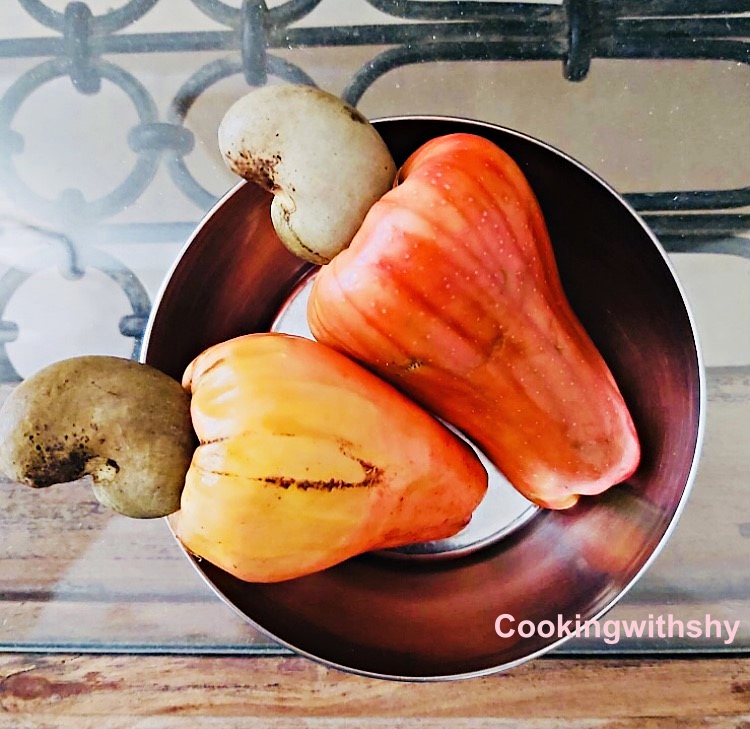
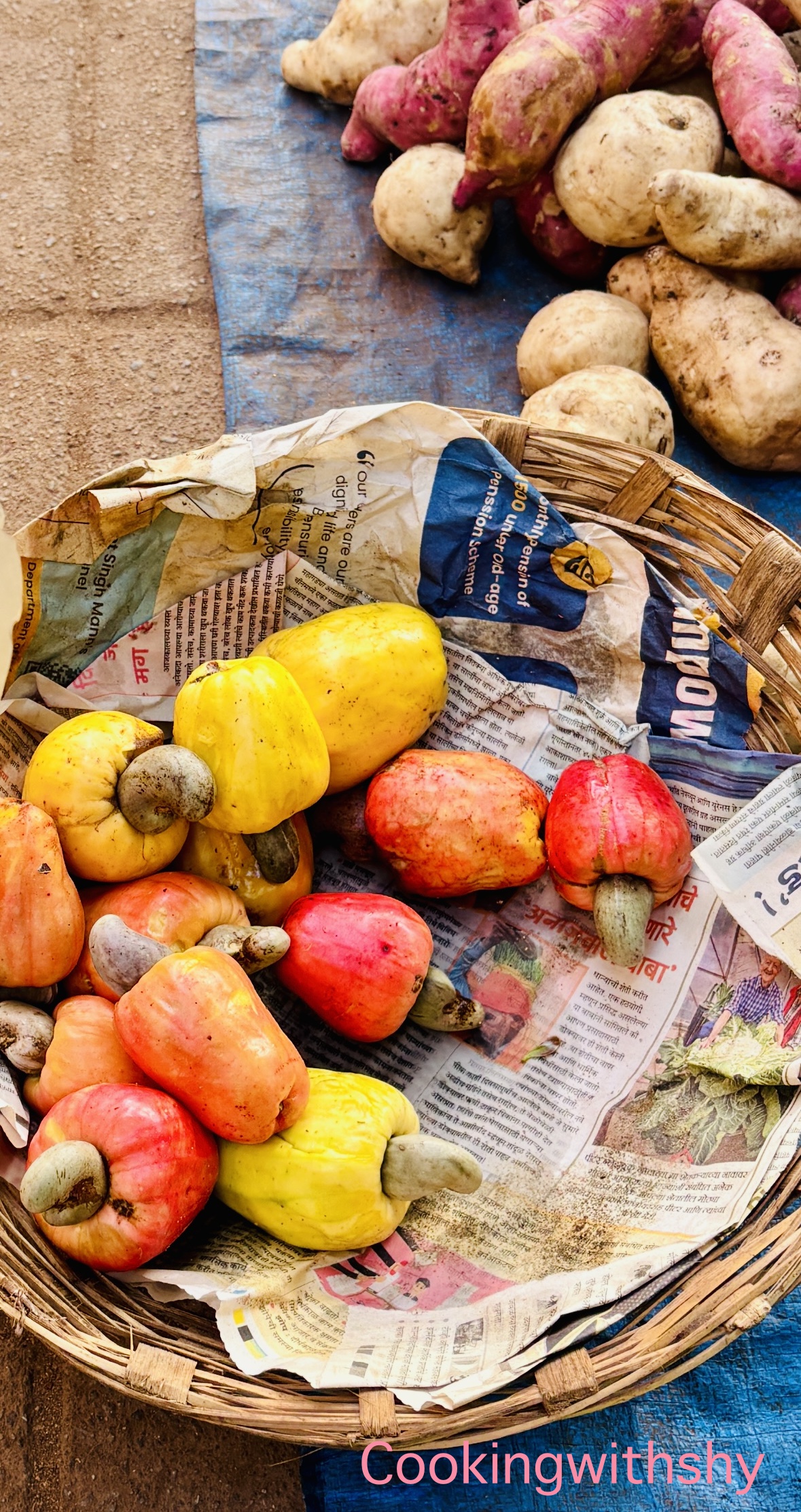
- Cashew Fruit: ( Cashew Nuts, Niro, Urak, Feni)
The cashew fruit forms an integral part of Goa and grown fairly extensively all over. While cashew nuts have a huge demand by themselves, the cashew juice obtained from the raw fruit is further consumed in its natural form which is refreshing drink called “Niro” which obtained by pressing the cashew fruit to obtain the final remains of the juice.
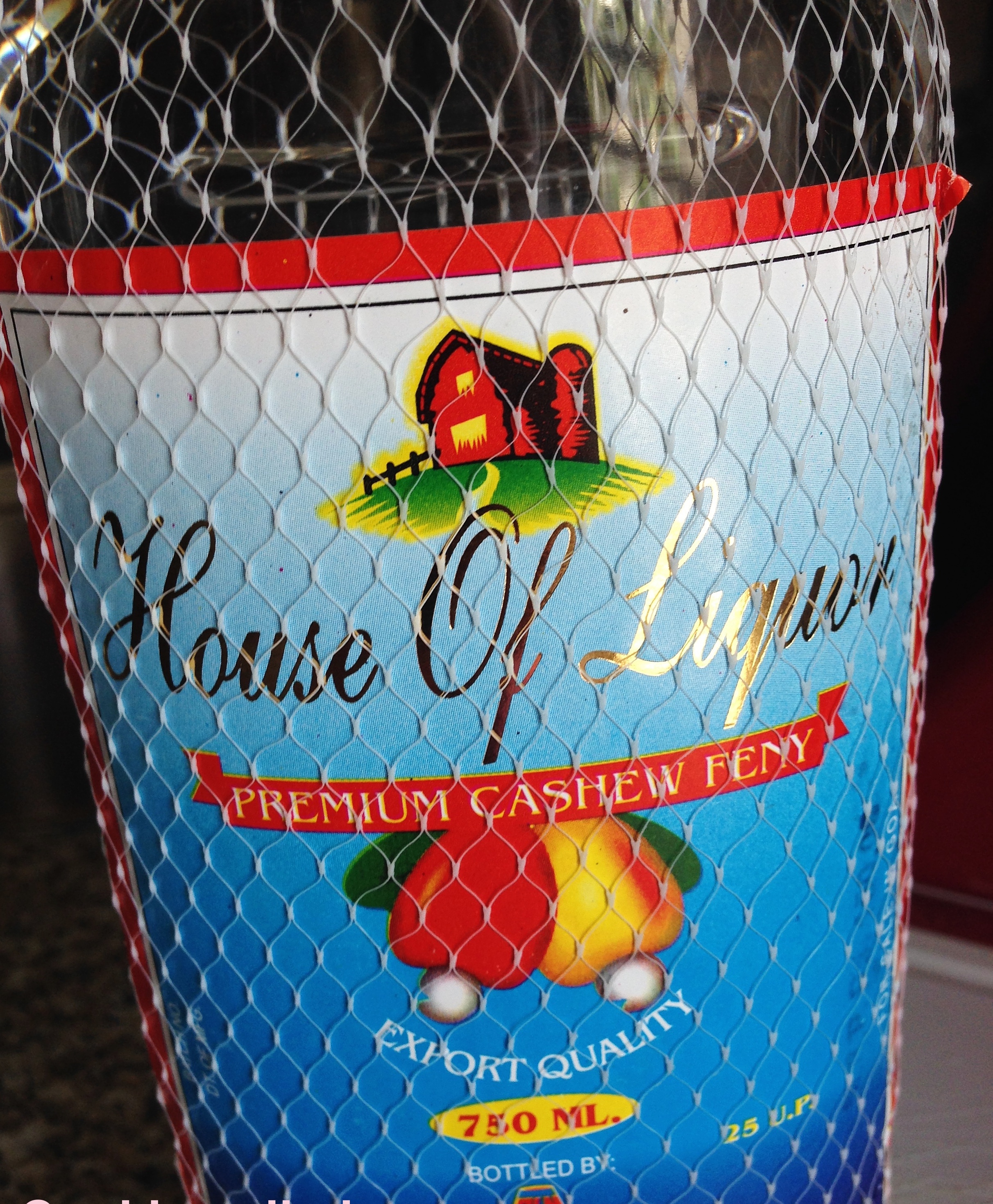
Further the juice is once distilled to obtain “Urak” and then fermented and distilled twice make the ever popular drink, “Feni”. Both Urak and Feni are fairly alcoholic in content.

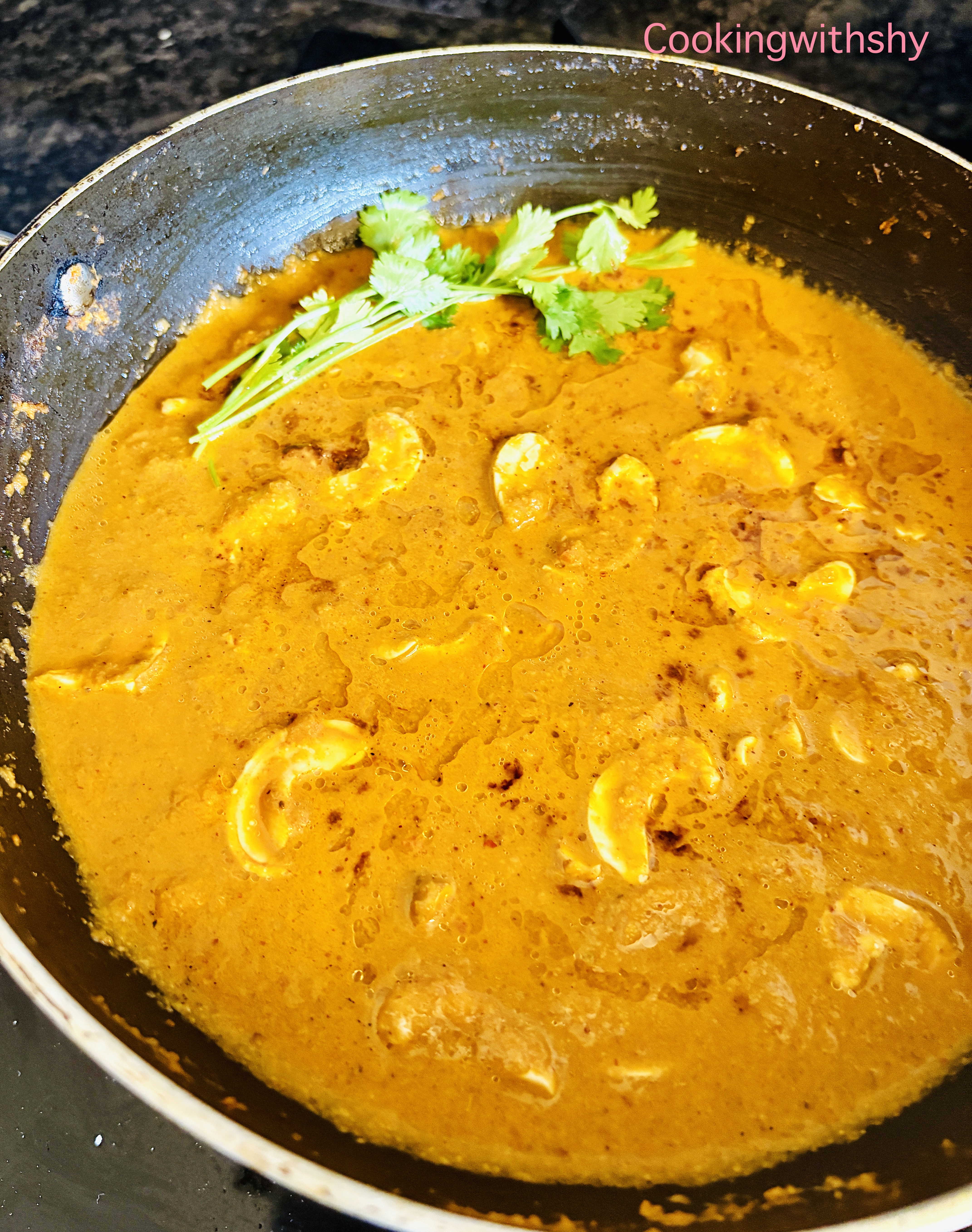
Tender Cashewnut Curry: The tender cashew nut can be used to make a delectable cashew curry whereby fresh grated coconut and various spices form the base for this curry.
2. Bhinda: (Fresh Kokum Fruit Or Garcinia Indica)
Summers in Goa brings on an abundance of Bhinda ( fresh Kokum fruit, or Garcinia Indica, a tree from the mangosteen family)) which makes a refreshing drink called Bhinda sherbat or fresh Kokum sherbat.The fruits are washed and de-seeded and the the skin of the fruit is placed in water and soaked for 2-3 hours. The mixture is further strained and chilled. Salt and sugar is added for flavouring. This drink is very popular in the summer. Thank you to Smita Kamat (my husband’s cousin) for introducing me to this ingredient.


3. Dried Kokum:
The outer cover of the fruit as seen above is further sun dried to obtain Kokam or Aamsul. This is used widely as a souring agent in most curries across Goa & Maharastra. A popular drink that pairs well a traditional Goan meal is Sol- kadhi. This is usually made by soaking the Kokum in warm water till a vibrant color is obtained. The kokum is then removed and fresh coconut milk is added to the kokum water. This is further seasoned with salt a pinch of sugar and garnished with freshly chopped coriander.
“Sol Kadhi” , is a satiating beverage by itself or can eaten with rice at the end of a heavy meal and hence said to aid in digestion and serves as a palate cleanser too. These are usually available pre packaged in most local stores in Goa and even sold loose at the traditional local markets.

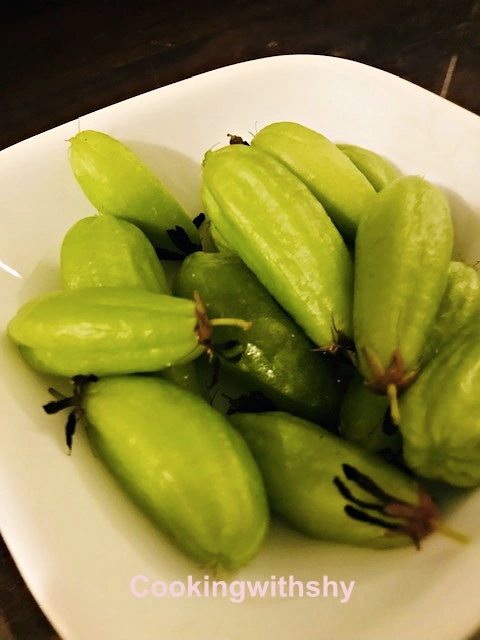
4.Bimbli: ( Also known as Bimbul or Bilimbi)
This fruit is quite often used as a souring agent in Goan curries and are also quite commonly used across Sri Lanka & South East Asia. Bimbli has quite the resemblance to a mini cucumber or a gherkin and is light green to yellowish in colour when ripe. The fruit is fairly tart and acidic in nature and hence cannot be consumed by itself and is often used to lend a sour flavour in cooking. It may be substituted for tamarind,vinegar or lemon juice in cooking, however purists tend to use this solely for specific curries and dishes.
It can be used in various and chutneys and pickles as well.
Thank you Pragya ( My Sis-In -Law) & Smita Kamat for the introduction to this ingredient.
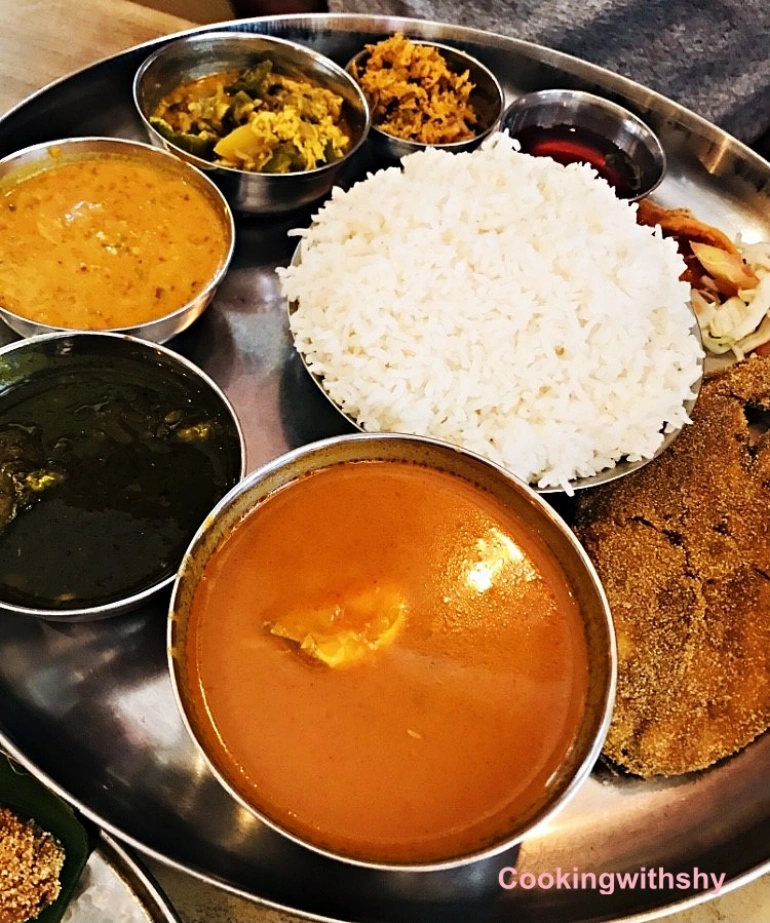
Bimbli is commonly used in Goan curries like the the Bangda Urid Methi ( Goan Mackerel Curry). Here is a thali we often devouver at our favorite lunch spot in Goa, namely the Kokni Kanteen.

5. Bedgi or Volanchi Chili:
This ever popular chili actually belongs to the neighbouring state of Karnataka. These chilies are rather thin and look quite like their counterpart the Kashmiri chilli. They are known as Volanchi which literally means wrinkled. The spice level that these chilies impart is medium hot and they lend a vibrant color to curries.
Bedgi chilies have a strong, pungent flavor which makes them a popular choice for those who enjoy spicy foods. They are used in a variety of traditional Goan curries, including curries, stews, and rice dishes, as well as in pickles, chutneys, and other condiments. Bedgi chilies can be found at most local spice markets and specialty stores in Goa.
6. Tefla:
This spice is probably indispensable in Goan cuisine. These green berries belong to the sichuan pepper family are harvested post summer and dried till then open up. The seeds are further removed and the pods are packaged and stored.
Used in vegetarian and non vegetarian dishes towards the end of the cooking process, Tefala lends quite a distinctive flavour.


6. Moringa Leaves & Drumsticks:
The Moringa or drumstick tree grows in abundance all over Goa. quite rightly termed as a superfood as the leaves weather consumed fresh or in their powdered form have several benefits. Interestingly all parts including the leaves, drumsticks and the flowers are edible and can be used in various preparations. I found these fresh Moringa leaves in our compound in Goa and sauteed them in a simple Dal preparation and tempered this with some black mustard seeds, cumin seeds, turmeric, asafoetida and coriander leaves.Thanks to my wonderful neighbour Anu Baliwada in Goa, who plucked these fresh leaves and drumsticks and got them over to our place.


7. Phagla:
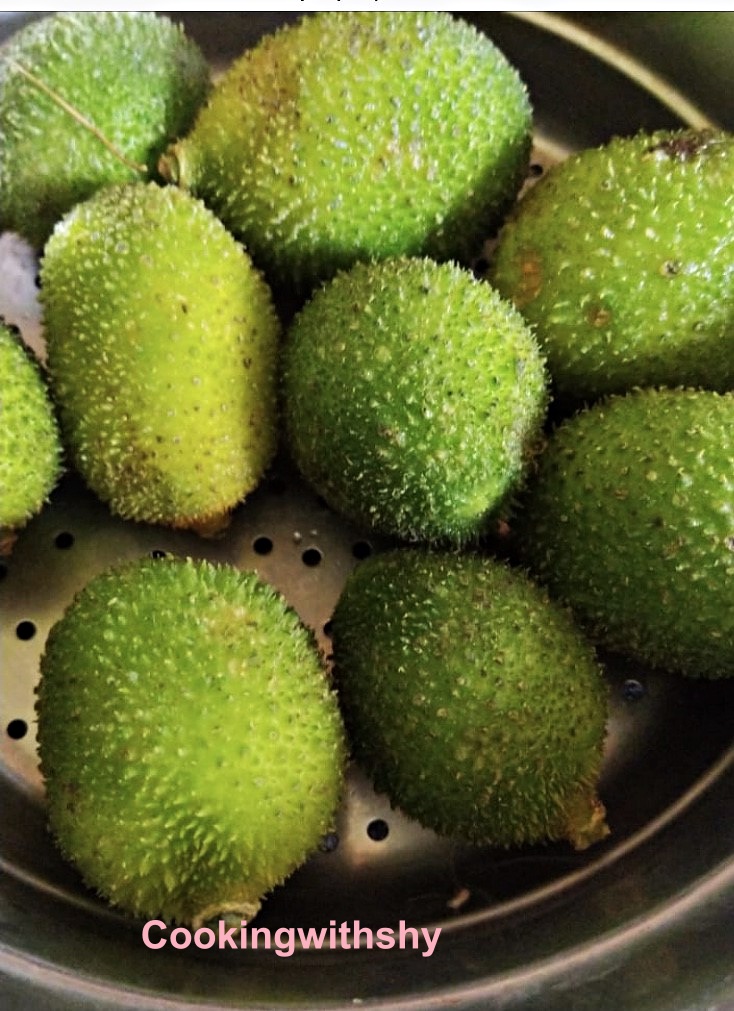
This is a seasonal vegetable typically available in abundance around the monsoons in Goa ( July -October). It could be classified amongst the bitter gourd family, but perhaps not as bitter. This spiny gourd is highly nutritious being rich in fibre,proteins, iron and a powerhouse of antioxidants.
Goan kitchens use this in several preparations such as Phagla Phodi( Pan fried fritters,whereby the phagla is cut in roundels and dredged in salt and semolina and spices and shallow fried) It may also be used in a simple stir fry with onions and spices. This was introduced to us by Smita Kamat on a recent visit to Goa. We devoured delicious Phodi’s made by her. Unfortunately, I forgot to photograph the same and will have to wait till it is in season again.
6.Goa Pork Sausages:
A trip to Goa is not complete without picking up the mandatory stock of Goa pork sausages. These are called “Choris” in Goa and quite similar to it’s Portuguese counterpart the “Chorizo”.
These sausages are essentially boneless pork meat which is salted with an addition of various spices, garlic, chili’s, vinegar and sometimes even coconut feni is added and it is then stuffed into casings. These are then smoked and kept to sun dry.
There are quite a variety available to choose from.Some branded ones like Costas, J0a0’s are readily available in the market stores or perhaps you may even like to buy some freshly strung one’s that the vendors sell at the local markets. Even better is one is able to source these sausages from the home of a local Goan.
These sausages are vacuum packaged and stay refrigerated for several months.
They can be made into a simple Goa sausage curry as follows which is often eaten with Goan bread “Poee”, this is often referred to as “Choriz Pao” on Goa.


7. Poee:
Bread making in Goa (albeit a dying art) is still very much a integral part of the Goan way of life.Bread making is an art that was brought to Goa by the Portuguese. Traditional Goan bread is called Poee or Poi. This bread quite easily resembles the middle eastern Pita bread as it can be sliced into halves and made into pockets. The dough calls for standard ingredients of Flour or a mix of whole wheat and all purpose flour, water and yeast. However traditionally toddy was used for fermentation instead of yeast which imparts a characteristic flavour to the bread.
Incidentally Pao in Portuguese means bread and a Goan bread baker is called a “Poder” who has a basket attached to his bicycle and rides around the neighbourhood selling freshly baked bread. He announces his arrival by honking the horn and is sort of a wake up call in the morning.
There are various other traditional breads such as the Kakan (bangle shaped) Undo (crisp bread ) and Katriche Pao (scissor shaped bread).
These are also available at the local municipal markets such as the ones at Mapusa & Madgaon as well as bakeries.

8.Feijao:
These beans are quite similar to the small dark kidney beans that one often uses. The term Feijoada is derived from the the word Feijao, which in Portuguese literally means “beans”. Feijao beans need to be soaked in water for several hours before they are cooked. These beans are also quite commonly called “Alsande” in goan, and the term “Alsande Tonak”, refers to a curry or gravy made using these beans. These can be cooked as a vegetarian coconut based dish or also with pork. Either ways they turn quite delicious.
We love cooking with Feijao in our kitchen and most often make a tonak (curry) which is cooked in an onion base to which a mixture of roasted ground coconut and spices are added and is usually tempered with mustard seeds, curry leaves and fresh coriander. The souring in this curry is brought about by the use of tamarind. The image below depicts the same. However the beans can be used in making various traditional non -vegetarian dishes as well such as the “Goan Feijoada” which essentially uses these beans along with pork sausages.


9. Mankurad Mangoes:
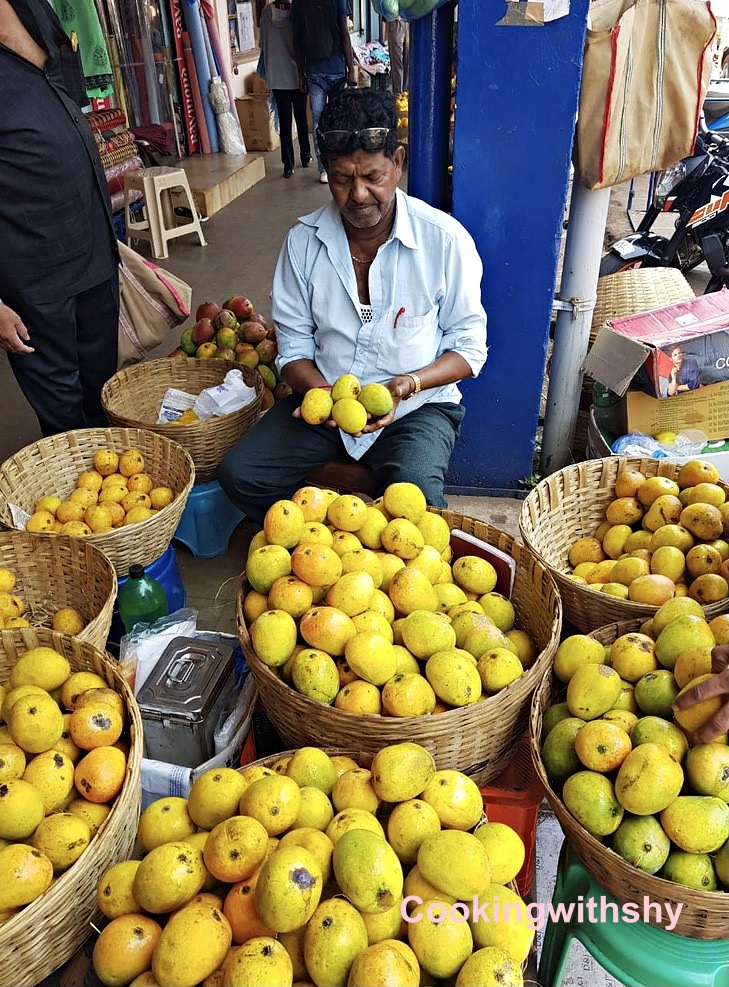
Perhaps quite undisputedly, Goa’s best loved mango is the Mankurad. The arrival of summer is heralded by this mango variety, wherein markets and bazaars in Goa s. Also known as Goa Mankur or Malcorado ( which incidentally means poor coloured in portuguese). This variety takes center stage all through goan households all summer long. Most enjoy the fruit as is and the flavours are a subtle mix of sweet and tart. However the texture as it turns out is much much pulpy and less fibrous as compared to most other mangoes.

Mango Shrikhand: ( Made using Mankurad Mangoes)
Also commonly known as Amarkhand. This dessert is quite the favorite all over Goa and Maharashtra as well. This is made using hung yogurt, sugar, saffron, cardamom and garnished with nuts. I like to make this by using some mango pulp and make it into a Mango shrikhand. We often make this during Diwali and other Indian festivals.

A Glimpse Into The Frenzy At The Local Municipal Markets In Goa: ( Panjim & Mapusa)

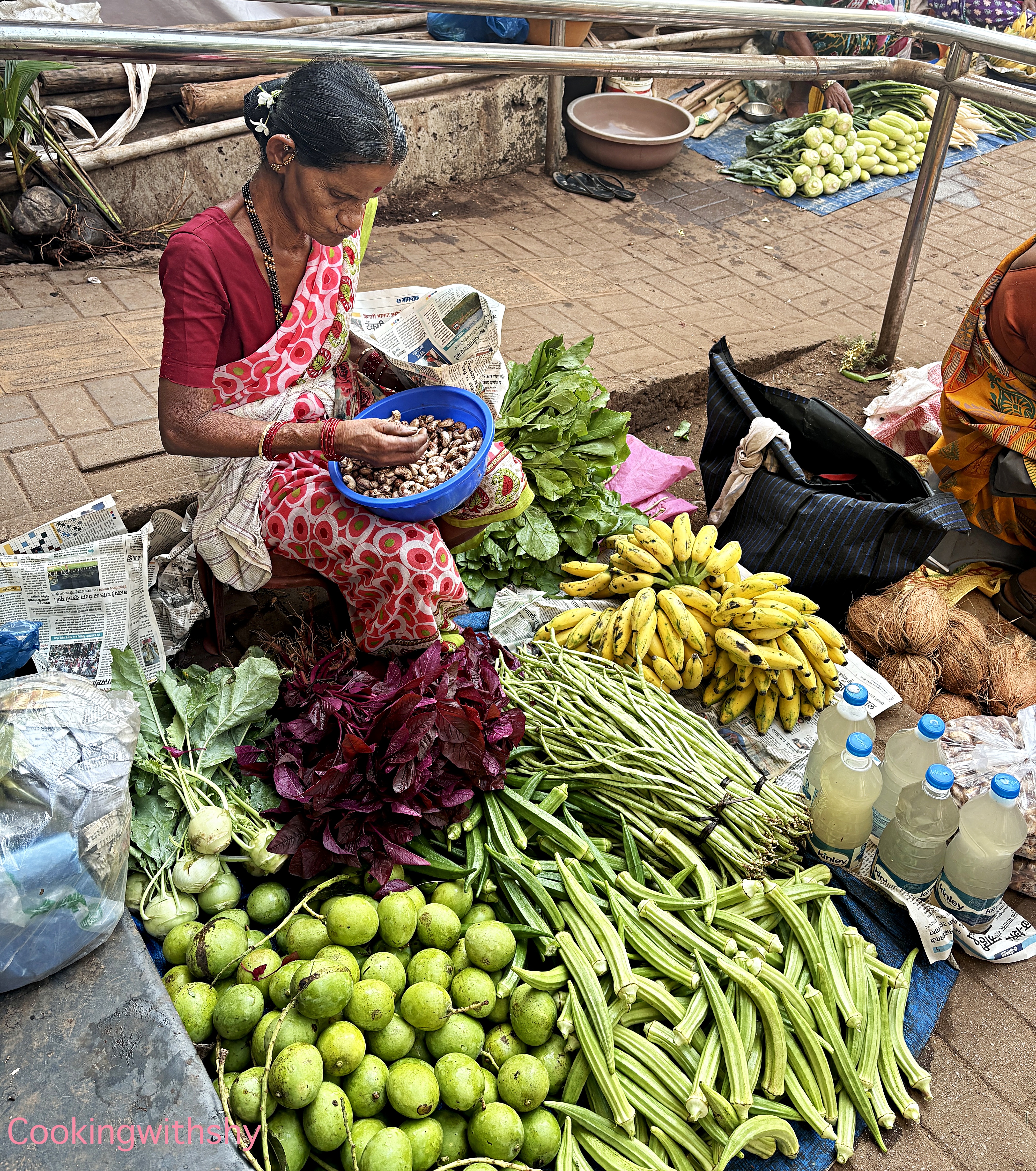
My stash of all things Goan from a recent trip to the Mapusa & Panjim municipal markets.

Some Of The Popular Municipal Markets Include:
The local markets in Goa are a great place to find fresh spices, as the region has a long history of spice production and trade. You can find a variety of fresh spices at these markets, including common spices like turmeric, cumin, and coriander, as well as more exotic varieties like cardamom, cinnamon, and cloves.
To shop for fresh spices in the local markets of Goa, you can visit one of the many street markets or bazaars that are held regularly throughout the state. These markets typically sell a large range of fresh produce, including spices, as well as other local products such as handicrafts, clothing, and household items. A visit to the local spice farms is an absolute must, which offer tours and often have shopfronts where you can purchase fresh, locally grown spices.
The following are some of my favorite market places in Goa:
- Mapusa Market: This daily market, located in the town of Mapusa, is a popular place to buy fresh produce and other food items. It is known for its wide variety of fresh fruits and vegetables, as well as spices and other cooking ingredients.
- Calangute Market Square: This weekly market, held on Saturdays in the town of Calangute.The Calangute fresh market is held every Wednesday and Saturday and is located in the center of town. It is a bustling, colorful market that attracts both locals and tourists. The market is known for its wide selection of fresh fruits, vegetables, and spices, as well as other local products such as handicrafts, clothing, and household items.
- Margao Municipal Market: This daily market,
- The Panaji local market: is held every day and is located in the center of the city. It is a bustling, colorful market that attracts both locals and tourists.The local market in Panji is a great place to find fresh spices and other local products.
Discovering local ingredients and most importantly cooking with them is a joy whenever I travel.
Most often our bags are packed with copious amounts of spices, condiments, sweets, local rice and pulses that then get turned into various experiments in my kitchen. Hence several trips to the local municipal markets tops my list on every visit. Most of these markets cater to the local flavors and often carry a mixed range of products that include fruits, vegetables, spices lentils and legumes.
Shopping for local produce is a great way to get a glimpse into the cultural nuances of the region and of course help in supporting local vendors and artisans.
After all food plays a significant role in any culture, and shopping for local ingredients and produce is a great way to get a glimpse into the cultural nuances of the region. Wouldn’t you agree?
You May Like Some Previous Posts On Goa.
- Goa Spice Farms & A Recipe: cookingwithshy.com/2015/10/08/goa-spice-farms-food-markets-and-a-recipe
- Goa In The Rains Is Magical: cookingwithshy.com/2018/08/22/goa-in-the-rains-is-magical/
- Chef Peter’s Kitchen: cookingwithshy.com/2018/10/15/peters-kitchen-reviving-lost-goan-portuguese-recipes/
- The Old Bakery Goa: https://cookingwithshy.com/2019/05/24/the-old-bakery-goa-a-hidden-gem-you-wont-find-on-trip-advisor/
 Cookingwithshy
Hi Shy, thank you for your comment on my blog.
I have to admit, I was not familiar with most of what you described in this post but perhaps next time we venture into Little India in Toronto, I will know what they are. My background is Hungarian and they too use vinegar as a souring agent in some saucy dishes; one in particular is Hunters’ Stew where julienne of vegetables of (carrots and parsnips) are par-boiled in a white vinegar and mustard broth and cooled, then spread over thinly sliced pork or beef or more authentically something wild like venison over night. It’s not only a souring agent but it’s a tenderizer too!
Hello Eva,
Thank you for stopping by.We were in Goa recently and I loved browsing around the local markets looking for seasonal produce.It was a wonderful discovery of course.
It’s great to know that you use vinegar as a souring agent in your cuisine as well. It does add a wonderful tang to many dishes:))
Hi Shy, what a wonderful and extensive post. I found it to be very interesting.
Hi Karen,
Thanks for stopping by and taking a look at this post. Hope you are well.